


How it works
Check. Register. Protected.
Check a slab whenever you like, register your cards and, if they're stolen, the network knows.
The heart of SlabCop, free for everyone
Every number, checked in 2 seconds.
It protects you and every collector.
- 1Type the number on the website, or scan the label with the app
- 2SlabCop looks it up among reported cards
- 3In 2 seconds you know if it's clean or stolen
How the app works
From card to Digital Vault, in 4 steps.
Each step is useful on its own: do what you need.
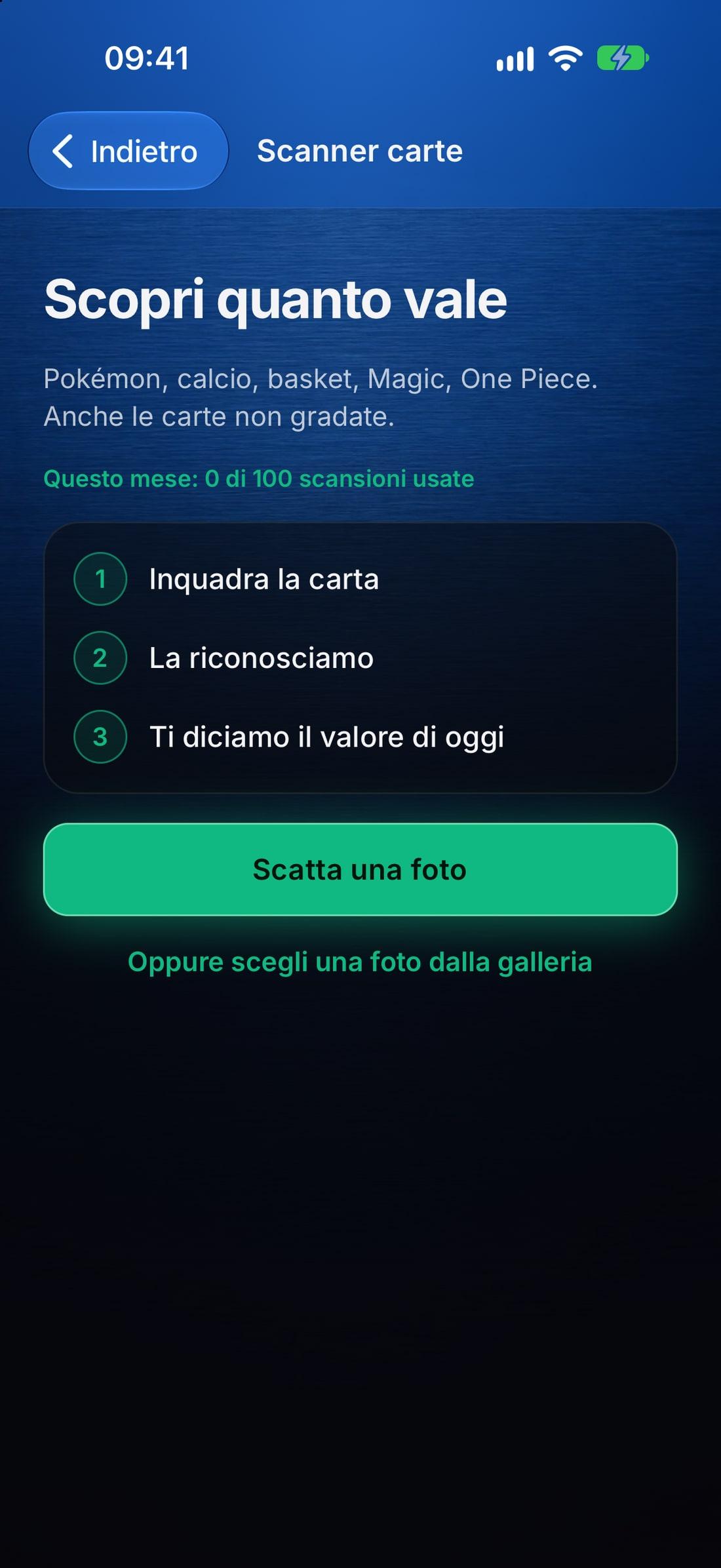
1Value
Find out what every card is worth
Snap a card, graded or not: the app recognises it and tells you what it's worth today.
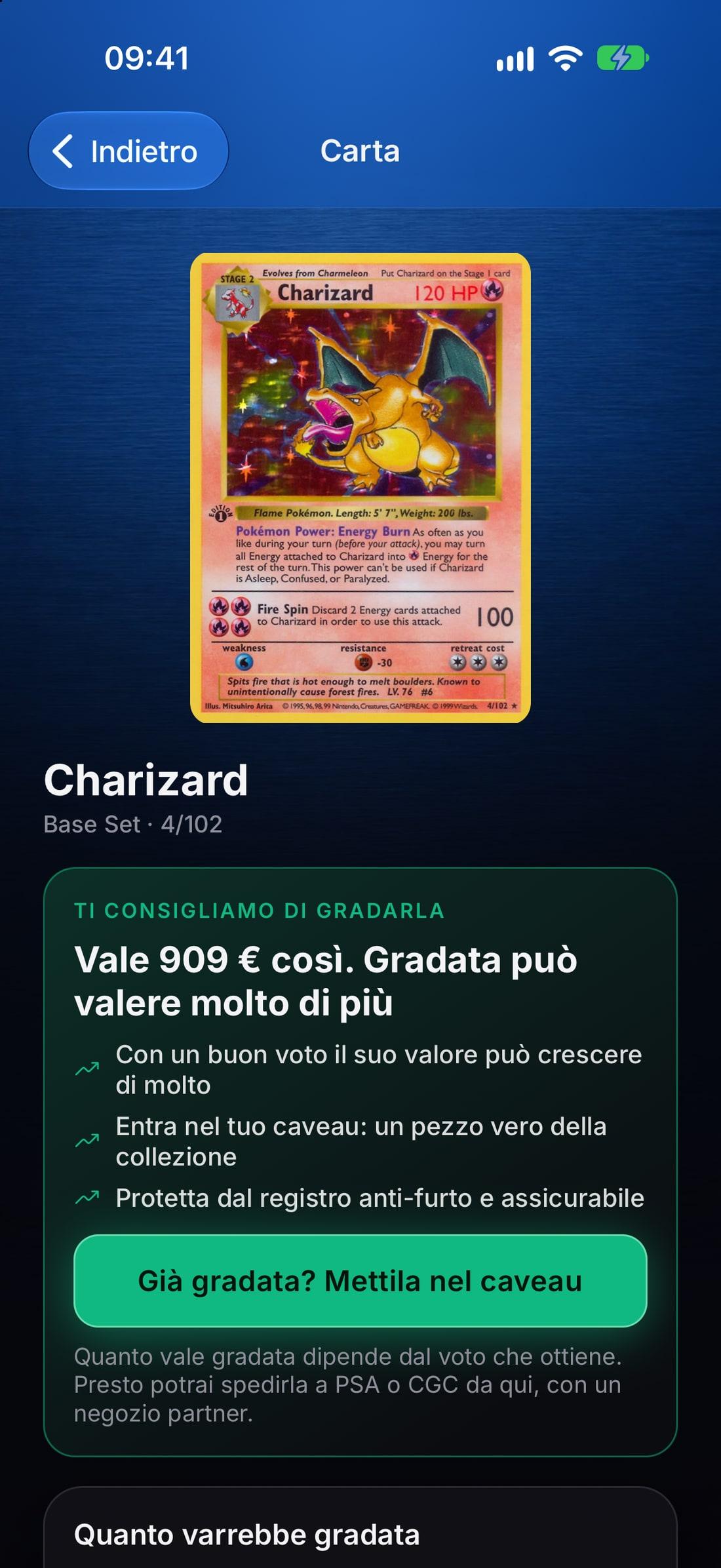
2Grading
Know when grading pays off
If an ungraded card is worth enough, the app tells you: graded, it can be worth a lot more. Soon you can send it for grading through a partner store.
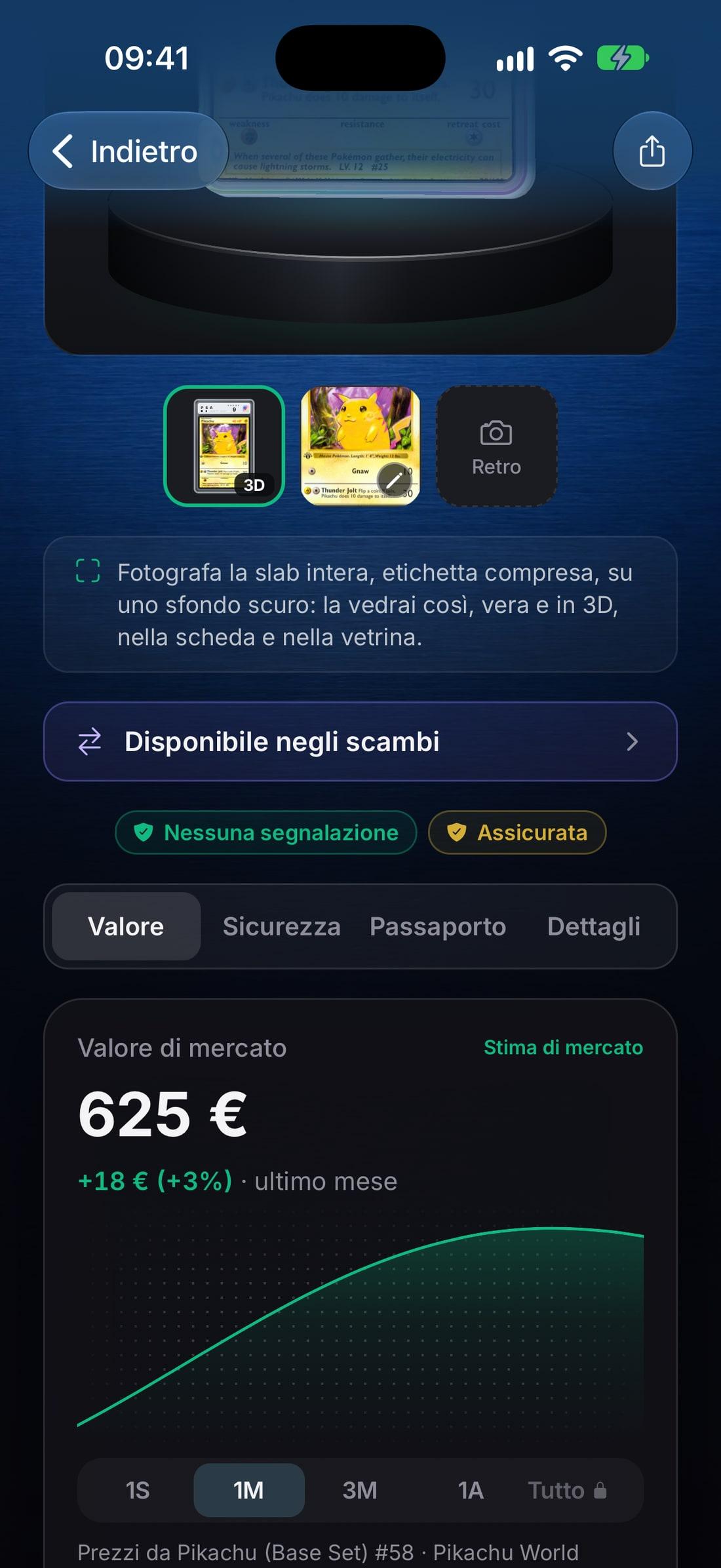
3Vault
Put it in the Digital Vault
Register it with photos and the certificate number. If it's stolen, anyone who checks it sees so straight away.
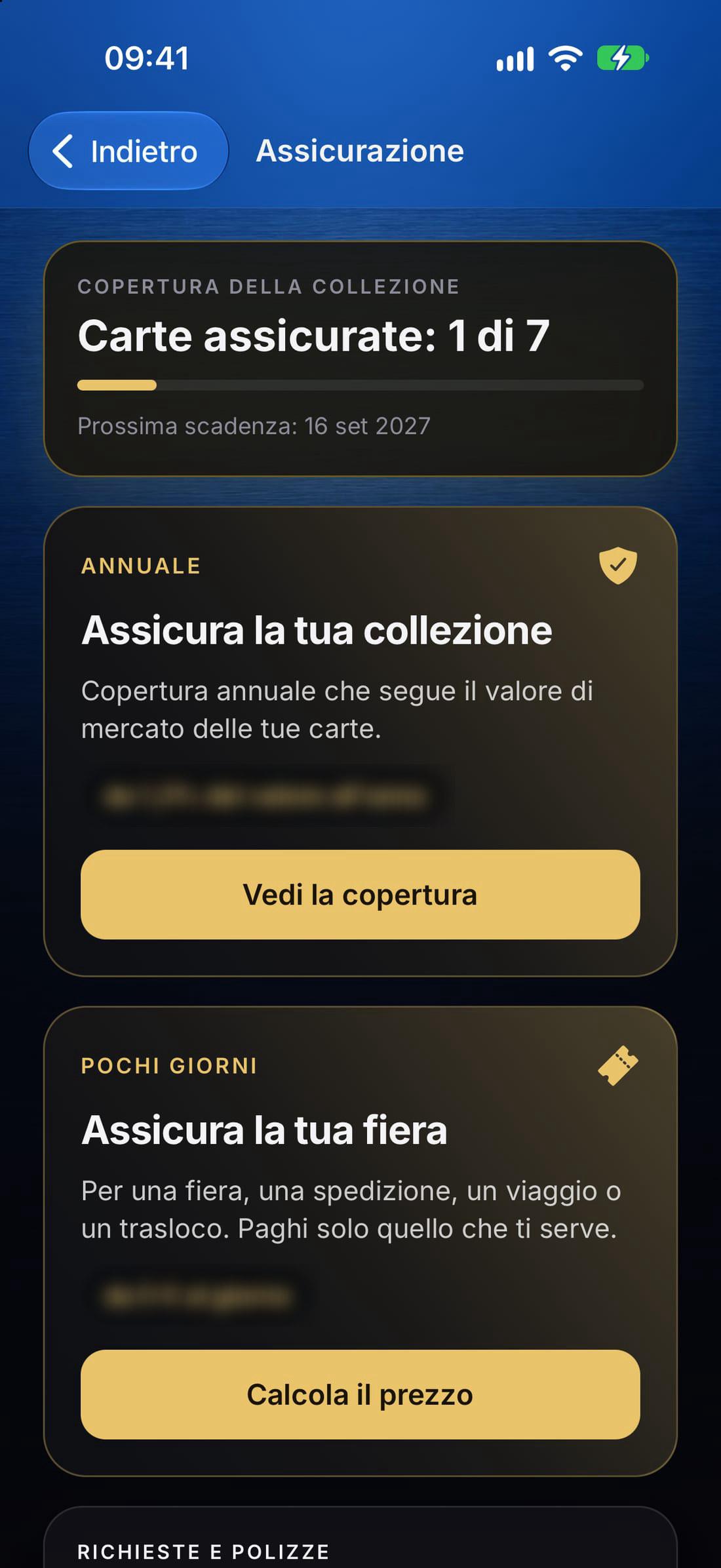
4Insure
Insure it
Soon you'll be able to insure it: all year round, or just for a show or a shipment.
The anti-theft registry
You register your cards and anyone can check them before buying. Here are five situations, with an example each.
Checking before you buy
Someone offers you a CGC 9.5 slab in a sales group. Before you pay, ask for the certificate number.
- 1
You see one of the three results below.
- 2
You don't see who the owner is: only the card's status.
The three results
- No reportsThe registry shows no theft for this card.
- ReportedA report is under review. Better to wait.
- StolenThe team has verified the theft. Don't buy it.
“No reports” says nothing about whether the card is authentic.
If the card is reported, don't buy it: the owner gets an alert.
Registering cards and boxes
You have forty slabs and two sealed boxes, and you want them to be recognisable if they go missing.
- 1
Create a free account, as a collector or a store.
- 2
Add each card with the certificate number, or scan the label. A box needs its barcode and 8 guided photos.
- 3
The card enters the registry with photos and a date. Only you can see your data.
A number that's already reported can't be registered: the case goes to our team.
Reporting a theft
You get back from a show and the box with five slabs is missing.
- 1
Pick the stolen cards from your Digital Vault or the store inventory.
- 2
Upload the police report. We read it automatically, then our team reviews it.
- 3
Anyone who checks those numbers sees the report. Nearby stores get an alert with the city and type of theft.
Reporting is free, even without a plan. We don't promise to find your cards: we make them much harder to resell.
When someone checks a stolen card
Two months after the theft, a store enters the number of one of your cards.
- 1
You get a notification on your phone, usually in under a minute.
- 2
You see the city, not the store: buyers acting in good faith are protected.
- 3
The team supports you and, if needed, informs the police.
When you get the card back, mark it as recovered and the report is closed.
Selling a registered card
You sell a registered slab to a collector in another city.
- 1
From the card page you create a transfer code, valid for 48 hours.
- 2
The buyer enters it or scans the QR code and the card becomes theirs, with its whole history.
- 3
The card passport shows registration, ownership transfers and status. Never names or places.
The transfer costs €1.99 and the seller pays. It's included in paid plans. The sale price stays private.
Soon you can insure them too
A card in the registry has photos, a date and an up-to-date value: exactly what's needed to insure it. We're working on it.
- 1Register your cardsPhotos, grader and certificate number. The app keeps the market value up to date.
- 2Choose what to coverOne card, a group or your whole vault. All year, or just for a show or a shipment.
- 3Get the offerThe broker sends you the insurer's price and terms. Read them in your own time and decide.
Keep an eye on the value
Every card's value updates every day.
- Monthly scans depend on your plan
- Trend chart: slide your finger and read the value day by day
- Ungraded cards free and unlimited
The more of us, the better the network protects
A registry works when lots of people use it. Every collector who registers and every store that checks grows the network: a card stolen in Milan is recognised in Naples too.
- 01
More registered cards
More stolen cards can be recognised, wherever they're offered.
- 02
More checks
Every store or collector who checks a number is one more pair of eyes.
- 03
Less market for thieves
If a stolen card can't be sold, stealing it pays much less.
Your Digital Vault, always in your pocket.
Like the banking app of the bank you trust, but for your cards: register them, see what they're worth and check any slab. Theft alerts are free.